Blog
Forces that Break vs Crush: The Invisible Fault Lines of the Soul

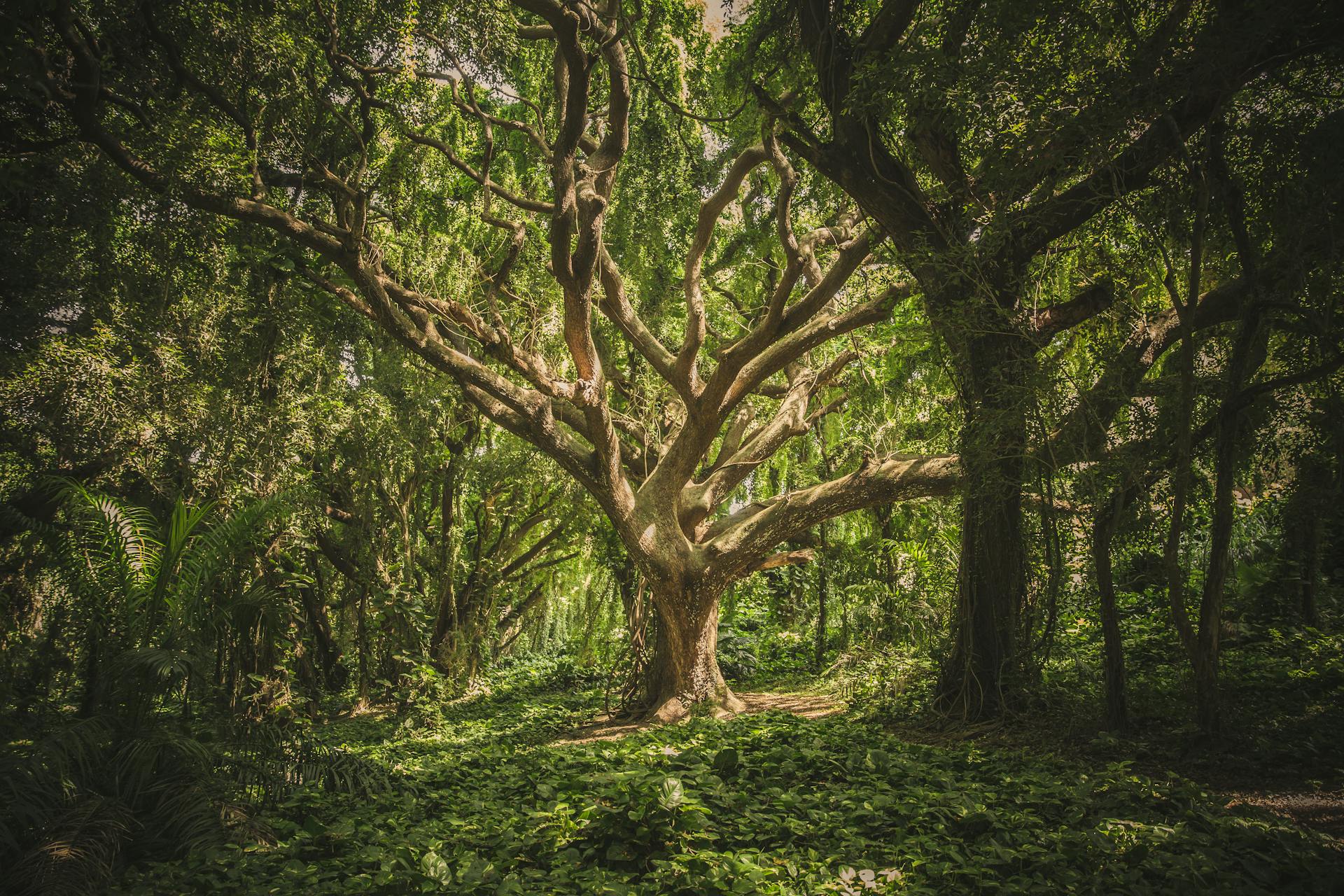
Understanding the forces that break vs crush requires us to look past the surface and examine the invisible fault lines we carry within.
I was making hard-boiled eggs on a Sunday morning when I understood something that had taken me decades to name.
To crack the shell, I did what I always do — held one egg steady in my left hand and struck it with the second egg in my right. But the one that cracked wasn’t always the one doing the striking. Sometimes the egg I held still was the one that gave way. Other times, the one swinging in was the one that split. And I stood at my counter in the quiet of the morning, staring at the un-cracked egg in my palm, thinking: which one was supposed to break?
I couldn’t stop thinking about it. Because somewhere in that question lived another one I had been carrying for years — the one about my sister.
Scientists who study fracture mechanics will tell you that cracking has less to do with who is hitting and who is being hit than it does with something invisible: structural integrity. An eggshell shatters at its weakest point — a point determined not by the force applied, but by microscopic fault lines already present in the shell. Hairline variations in thickness, tiny imperfections formed long before the egg ever left the nest. The shell that looks the same as every other shell might be the one closest to breaking. You cannot tell from the outside.
Force is only the occasion. The fault line is the story.
But here is what fracture mechanics also tells us, and what I did not know until I needed to know it: there is a difference between a crack and a crush. A crack produces pieces. Fragments with edges that can be found, gathered, held in the palm. A crush produces powder. Dust. Something so fine and dispersed that no human hand can collect it all, no matter how long you stay on your knees trying.
A broken thing can be mended. A crushed thing is simply gone.
I have been thinking about the girl I was, and what fault lines she was forming without knowing it.
She was the oldest child in a house that ran on love and barely — love and not quite enough, love and holding on. Her father was a World War II veteran who had come home from the Pacific with something dark living behind his eyes, something he never named and she never asked about. Her mother was a woman of extraordinary will who had migrated north from Mississippi and decided, simply, that the family would survive. And the girl learned early what was required of her.
In the house on Spring Street, there was a broken sash window at the foot of her parents’ bed. The kind that works on a pulley system. After her father lost his vision, the window had to be propped open with a stick — placed just right, or it would slam shut. They stored the stick between the window and the screen so it wouldn’t go missing.
She became that stick. Slid quietly into place between two people she loved, holding the window open so they could all breathe. Always within reach. Always stored somewhere handy.
She thought this was love. She was right. She was also being shaped around that posture, her shell forming around that particular angle of self-erasure, before she had words for any of it.
And behind her, six years younger, following her through every room of that house like smoke drifting out of a tailpipe — was her sister.
My sister June followed me her whole life. Not in imitation. In alignment. Our lives ran on eerily parallel tracks — the same rhythms, the same patterns, the same invisible fault lines forming in the same places for the same reasons. This happened because I was, in some ways, her mother and her sister both. Because we were woven from the same cloth and shaped by the same hands. Because when I moved, she moved. When I exhaled, she breathed.
For a long time, I thought this meant we would arrive at the same place.
We did not.
I am still here. June is not.
And the difference between us — the thing I turn over in my hands on Sunday mornings when the eggs are cracking — is not that she was weaker. It is that what came for her did not crack her. It ground her. Slowly, over years, the way a millstone works — patient and relentless and indifferent to the fact that what it is reducing was once whole, was once full of something warm and alive.
There are forces in this world that break. And there are forces that crush. They do not look the same. They do not feel the same. And they do not leave the same kind of remains.
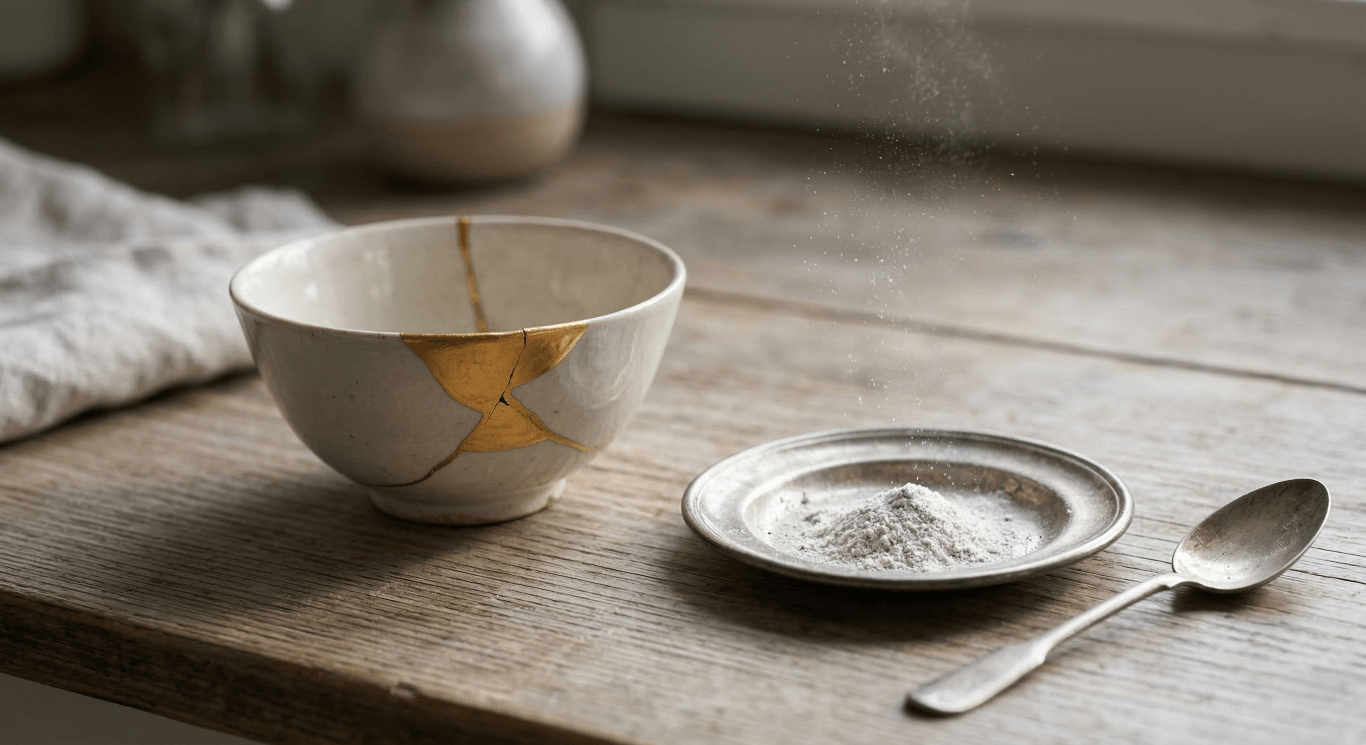
I was broken. I want to be precise about this because it matters. I was struck, I cracked, I fell into fragments — and the fragments had edges. They could be found. They could be held. They could be laid out on a surface and studied and, in time, fitted back together. Japanese craftsmen call this kintsugi: the art of repairing broken pottery with gold, so the repaired object is not just whole again but marked by what it survived — honest, luminous at the seams.
I am kintsugi. I carry my cracks in gold. This is what I know about myself now, in the later chapters of a life that nearly unmade me.
June was not broken. June was crushed. And I know this not only in the way you know things you have lived through — I know it in my hands.
After she was gone, I held her ashes. I divided them — gave portions to our children, kept a portion for the travels I intend to make in her name, spreading her somewhere wide and open and worthy of who she was. But first, I placed a few tablespoons of her into a shallow dish on my altar. At sacred thing, done slowly, done carefully, done with every intention of containment.
I could not contain her. No matter how slowly I spooned, no matter how gently I moved, the dust rose. White. Fine beyond measure. The kind of fine that only comes from something that has been ground completely — not broken, not fractured, not left in pieces. Ground. She drifted upward in the light and I could not stop her from dispersing, could not gather back what was already lifting away, could not hold in my hands what had been made too small to hold.
I pinched her between my fingers — my sister, my smoke, my shadow — and the full weight of it arrived at last. Not grief, exactly. Recognition. This was the word made flesh. This was what crushing leaves behind. This was what I had survived and she had not, and the difference between us was not strength or love or will. It was the nature of the force that found us.
I am still on my knees, after all these years, trying to gather what is left of her — knowing that I cannot, knowing that the very nature of what happened to her made gathering impossible, and writing about it anyway because silence is its own kind of crushing and I have had enough of both.