Blog
Healing From Grief: A Sister’s Story of Love and Loss

When navigating the complex path of healing from grief, we often find our own reflections in the people we lose. She arrived on January 3rd.
My parents brought her home wrapped in pink, and I met her in the doorway — six years old, already a veteran of worry and wonder, already somebody’s little mother-in-training. She was small and new and impossibly soft, and I reached out and touched her cheek the way you touch something you are afraid might disappear.
I did not know that I was meeting the woman who would follow me for the rest of my life. I did not know that she would die on that same date, fifty-three years later, two days after the birthday she shared with the new year. I did not know that I would spend the years between her arrival and her leaving believing I was leading her — when the truth is something stranger and more sacred than that.
We were not two women walking the same road. We were one woman casting a shadow, and her shadow had a name.
The house on Spring Street smelled like the whole century that had passed through it. Dust and coal and the ghost of things burned for warmth. The basement furnace was an octopus — great iron tentacles reaching in every direction — and in winter it breathed like something alive, radiating a heat so deep you could feel it in your back teeth. Next to it was the old coal room, dark as a held secret, the walls gritty with what had kept the family warm before our time.
My father’s aftershave cut through everything. It arrived before he did. It lingered after he left the room. I did not know the name of it then — I only knew that it smelled like safety and danger at the same time, the particular cologne of a man who was trying. My mother moved through the house in her blue cotton caftan like weather. She was her own climate. When she was warm, every room was warm. When she was electric, you felt it in your fillings.
And down the block, on ordinary afternoons, the German bakery exhaled sugar and yeast into the street like a benediction. I could taste the smell of it. That is what I mean when I say the body remembers what the mind lets go — fifty years later, fresh bread still reaches me before my grief does.
June grew up inside all of this. She absorbed it through her skin the way I did — the warmth and the chaos, the love and the held breath, the particular anxiety of a house that ran on hope and barely. She was six years behind me, which meant she watched me navigate every room before she had to enter it. I went first, always. I was the cartographer of that family’s emotional terrain, and she followed the map I didn’t know I was drawing.
I became her mommy sissy. It was not a title given to me — it was a gravity. I was drawn toward her the way I was drawn toward everything that needed steadying, because steadying things was the only language I had learned fluently. I was six years old and already praying in bed at night, hands pressed so tight my knuckles went white, asking God to bring our father home safe from wherever the drinking had taken him. Anxiety had moved into my body like a tenant who never paid rent and never left.
Helping June helped. When I could fix something for her, my own fear had somewhere to go.
And so, I fixed. And she followed. And neither of us understood what we were rehearsing.
The pattern our parents planted took root in us both. We were women who loved without condition and without ceiling — who gave from the deepest part of ourselves, past the point of sense, past the point of safety, because we had been trained before we could speak that love was a verb requiring constant, costly action. We married our lessons. We mothered our wounds. We poured ourselves out for people who mistook our devotion for an endless supply.
I was being consumed by my daughter. Slowly, the way a fire consumes paper — not all at once, but steadily, from the edges inward, until what you thought was the whole page is really just the ghost of one.
I did not know I was burning. That is the particular cruelty of that kind of slow taking — it does not announce itself. It does not arrive in a single dramatic moment you can point to and say: there. It happens in the accumulation of ordinary days, each one costing a little more than the last, until you look up one morning and you are translucent with the effort of staying whole.
I was dying. Not loudly. Not in any way that would appear in a cause of death. I was dying the way women like us die — casually, in the middle of our own lives, still showing up, still reaching, still being the stick in the window for everyone else’s frame while our own was coming apart at every joint.
June was dying the same way.
Her children had begun to drift — not all at once, but in the way tides recede, so gradually you don’t register the waterline dropping until the shore you’re standing on is suddenly exposed and cold. She kept their rooms ready. She checked her phone the way you check a wound — compulsively, hoping it had somehow healed while you weren’t looking. She waited at the table she kept set, for children who had learned from someone how to abandon the people who loved them without explanation, without apology, without looking back.
I could see it happening. And I could not reach her with the truth because I had not yet reached myself with it.
We were two women following the same smoke into the same burning building, because neither of us had learned yet that we were allowed to stop. To turn around. To say: not this time.
At my wedding, June sang.
John Legend’s “Stay With You.” Her voice was its own weather — it moved through the room and settled in your chest and stayed there the way certain things stay, the way the German bakery stayed, the way our mother’s hands stayed, the way some sounds become permanent residents of your body without asking permission.
She meant every word. June always meant every word. She did not know how to love partially or provisionally. She loved the way the Spring Street furnace heated — from the center outward, filling every room, leaving no cold corner untouched.
I should have understood then what her whole life was saying: that she would stay until she could not. That she would wait until waiting wore her out. That the body, as my mother warned me, wears out.
My mother told me that. My mother saw it coming, in herself and in both of her daughters, and she said it plainly: “Don’t do that to yourself, Tracey. The body wears out.”
I did not listen. Not for thirty more years.
June did not get thirty more years.
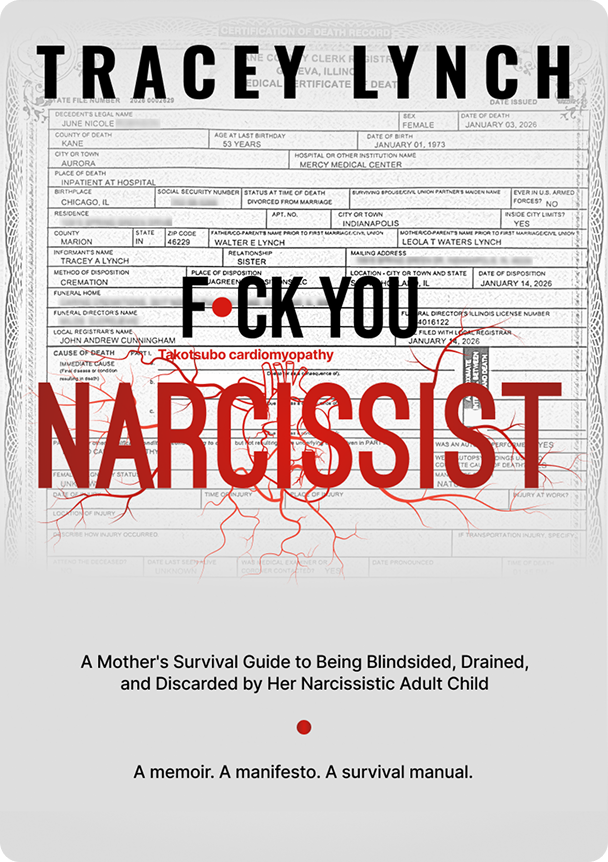
She died on January 3rd, 2026. The same date I had first met her in that doorway 53 years prior, the pink baby, the beginning.
Her heart stopped. That is what they wrote down. But I know what exhausted it. I know the particular labor that wears a heart to its last beat — the labor of waiting for people who are not coming, of loving people who have learned to use love as leverage, of being ground down so slowly and so completely that by the time the end arrives, there is nothing left to break. Only dust.
June did not break. I know that now, in a way, I did not know it when she was alive. She was not fractured — she was eroded. By the slow, patient, indifferent forces that surrounded her. By the particular configuration of people in her life who took without returning, who diminished without naming it, who made a woman who could fill a room with her voice feel like she was too much and not enough at the same time.
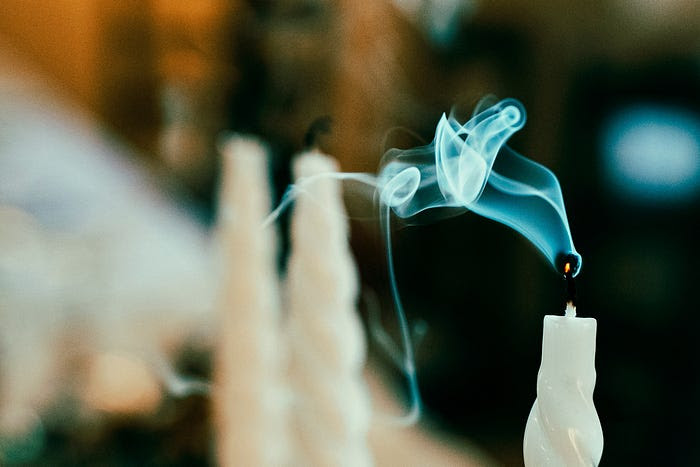
When she left, the smoke cleared.
That is the only way I can describe what happened to me after June died. I had been following my own exhaust for years — moving forward in the fog of my own output, the way you drive into your own headlights and believe you can see — and her death was an eternal whiff of something acrid and undeniable that cut through everything. I choked on it. And in choking, I woke up.
She died before me. She handed me the baton. She gave me ten more years and the understanding that I could not afford to spend them the same way she had spent hers.
It was almost too late. The edges of me had been burning for a long time. But almost is not the same as gone. And broken — I have learned this at the cost of everything — is not the same as crushed.
I was broken. I could still be gathered. I could still be mended.
I turned around. I walked out of the smoke. I began, for the first time in my life, to be the stick in nobody’s window but my own.