Blog
The Shape of Grief: Mourning an Unnamed Loss

On the sister I mourned before she died, the three days I would trade almost anything for, and the sentence at the center of this grief that I have not yet been brave enough to say out loud
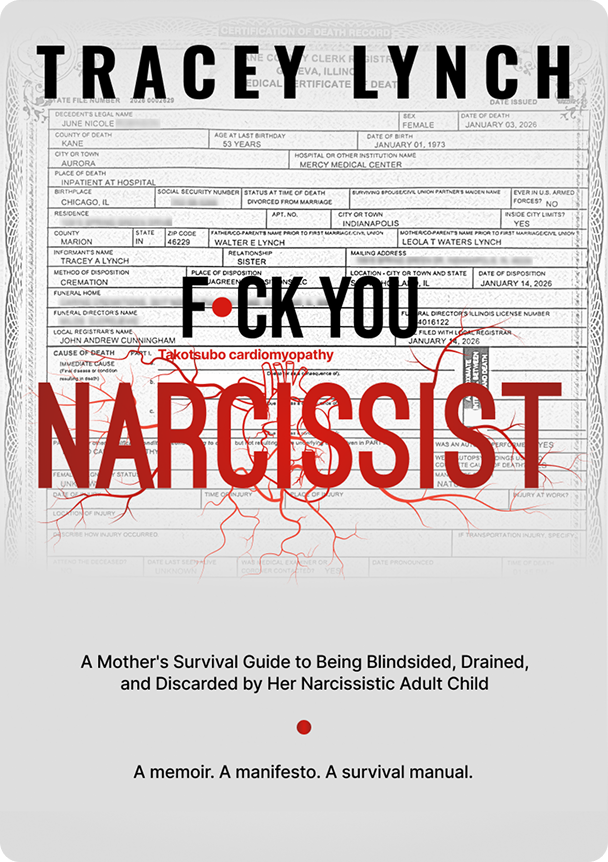
My sister June died on a Saturday in January. Two days after her birthday. Two weeks before mine, forcing me to confront the brutal, unexpected shape of grief.
And here is the sentence I have not been brave enough to say out loud until now:
Part of it was a relief.
I want you to read that sentence again. I want you to understand what I am doing with it, and what I am not doing with it. I am not saying I wanted my sister gone. I am not saying I am glad she is dead. I am not saying her death was a blessing or a deliverance or any of the language the church reaches for when it does not know how to sit inside a hard truth without dressing it up first.
I am saying: when the body finally caught up to the dying the soul had been doing for years, part of me let go of a rope I had not realized I had been holding.
The relief had senses. I am not going to soften this. It smelled like a window being opened in a room that had been sealed for ten years. It sounded like an exhale that had been waiting in my chest so long it had forgotten what it was waiting for. It tasted like cold water at three in the morning, the morning the call came.
And that relief — that relief — has a guilt attached to it that no one warned me about. There is no card aisle for it. There is no Hallmark sentence for the woman who is, on the same morning, mourning her sister and exhaling that her sister no longer has to keep waking up into the country she could not leave. The relief and the grief are not opposites. They live in the same room. They are the same room.
I am not a monster.
I am a woman who lost her sister twice — once slowly, and once on a Saturday — and the second loss was, in some terrible private way, easier than the first.
That is the sentence I have not been brave enough to say.
I am saying it now.
I lost June before June died.
I want to say that clearly, because most grief essays do not say it. They start at the deathbed. They start at the call, or the funeral. They start at the place where the loss is named. The named loss is the easy one. It has a date. It has a casket. It has a place where people gather and bring food. The named loss is the loss the world has built a vocabulary for.
The unnamed loss is the one I had been carrying for years.
The unnamed loss is watching your sister become a country you can no longer enter. It is the slow disappearing of a woman who was once incandescent — a woman who used to call you on a Tuesday afternoon just to say something funny her dog had done, a woman whose laugh entered a room before her body did, a woman who once, in our shared kitchen in the late nineties, looked up from a bowl of soup and called you sissy in a voice that made you understand, even then, that some words are a kind of home.
She laughed before the punchlines of her own jokes. Every time. She could not wait for the room to get there — she would start laughing two beats early, sometimes three, and the laugh would arrive in the air before the line did, and you would find yourself laughing at her laughing before you even knew what she was about to say. No one else on this earth has ever made me laugh in that particular order. The order is gone now. That is one of the small specific shapes the absence has taken.
Her voice in those last years had a sound that was not her sound. It was the sound of a radio station I had grown up listening to that someone had been turning down by quarter-turns for so many years that by the time I noticed, the volume was at one and I could no longer tell whether I was hearing the music or only the memory of it.
It wasn’t cancer.
I want to say that very clearly. June did not die of cancer. I do not want to take a word from women who are fighting an actual disease with a name and an oncology floor and a chemo chair. That is not the word I am reaching for.
But what was eating her — what had been eating her for years — was cancerous in its behavior. It was patient. It was daily. It was metastatic. It moved through her in a private country no scan could see. It took her appetite for the world. It took her ability to pick up the phone. It took her laugh, in slow installments, the way a thief takes a house — not all at once but room by room, until the woman who used to live there was sleeping in a single chair near a window and could not remember what the other rooms had been for. The depression, the loneliness, the isolation, the slow violence of three adult children who had decided their mother was a problem they no longer wished to solve — those were not separate things. Those were one disease wearing four costumes.
She was being eaten alive by her own soul going hungry.
And I watched it happen.
This is the first loss. The unnamed one. The one I am only now, in print, allowing to be a real funeral. I went to that funeral alone, for years, without flowers, without a date, without anyone who could meet me at the door and say yes, I know — your sister has been dying for a long time, and you have been the only one keeping count.
Saturday is not my day. Tuesday is mine — the day I was born into, the day I count toward, the day I do the math at the porcelain. Saturday is hers now. The day she left. The day my calendar split into two columns colored differently.
Her death did not announce itself the way I had been prepared to expect. It did not feel like a door slamming. It smelled, in some strange way I am only now finding language for, like hallelujah — like a word with too many vowels released into a closed room. It sounded like a bell whose tingle was already dwindling in my ear before I understood the bell had been struck. I kept tilting my head toward where the bell used to be. I am still tilting it. I am tilting it now.
A reader wrote to me about The Thing Off to My Right, the essay I wrote in the first weeks after her death.
She used a word I have not been able to stop turning over since I read it. She said the essay gave grief a geometry. Orientation, distance, position. She said it captured something psychologically real — what she called permanent presence. And then she asked, quietly, what most people will not ask out loud: she said she had a sister, too, that she loved dearly. And she said she did not know what shape that grief would take inside her if she ever had to find out.
I have been sitting with her question for days.
This essay is part of my answer.
If I could have her back, I would not ask for forever.
I would ask for three days.
I have thought about this carefully. I have thought about it the way I think about my numbers — with my hands on the porcelain and the water running. Three days. Not three months. Not three years. Three days is what I want.
I want to check the pulse.
I want to sit with her one more time in a kitchen and watch her drink coffee and see, with my own adult eyes, whether it was really as bad as I remember. Was she that lost? Was she that alone? Was she that far from the woman I had grown up with? I want to verify. I want the receipt. I want to know, with the specific weight of a thing I can put down on the kitchen counter and walk away from, that her dying was the merciful answer and not the failed one.
I want a kiss.
I want her to lean over, the way she used to, and put her forehead briefly against mine the way only she ever did, and pucker her lips for me the way she always did — with an exaggeration no one else has ever bothered with, a kiss made theatrical on purpose because that was her humor and her tenderness collapsed into one motion. Her forehead was warm at a temperature I have not yet found in another body on this earth — not my husband’s, not anyone’s. It is its own degree. I do not have a word for it except June. And I want her to call me sissy one more time in the voice that was hers and not the voice the disease had been speaking through her at the end. Sissy in her voice did not only have a sound. It had a temperature. It was warm at the front of my chest. The word is gone now and the warmth is the part I have not learned to live without.
And — this is the hardest part of the three days, and I want to be honest about it — I am asking for three days and not asking for more because I cannot watch her suffer for longer than three days again. I have already watched her suffer for years. I do not have another decade of that inside me. I have one weekend. I have a Friday, a Saturday, a Sunday. I do not have enough strength to bring her back into a life that would resume the eating of her soul on Monday morning.
The three days are an honest negotiation. I want enough to verify. I do not want so much that the suffering resumes. The three days are the shape of a love that has already done its full tour through hell and is asking only for a footnote, not a sequel.
But I am not going to get the three days.
Grief, in the country I am living in, does not give receipts. The Thing Off to My Right was the geometry. The diagonal thing was the position. But there is one more dimension to this country I did not yet have words for, and I have them now: the country off to my right does not let me back in to check. Not for three days. Not for three hours. Not for three minutes. The questions I want to ask June will not be answered by June. They will be answered by me, for the rest of my life, in a voice that is mine pretending to be hers — and that is not the same thing, and I know it is not the same thing.
The first dimension was the position — off to my right.
The second was the permanence — the reader called it presence. She was right. It does not leave.
The third is the unverifiability. It is the silence where the receipt should be. It is the kitchen counter where the answer was supposed to be placed and never was. It is, in the language I am building for this in real time, the country that does not return your letters.
To the reader who asked: this is the shape.
It is the shape of having lost her twice — once slowly, into a country none of us named, and once on a Saturday in January.
It is the shape of a relief I am only now allowed to say out loud.
It is the shape of three days I will not be given.
It is the shape of a kiss I will not receive.
It is the shape of a single word — sissy — that no other person on this planet will ever say to me in her voice again. Not because there is no one left who loved me. There is. There are many. My husband. My dogs. The women I write for. The reader who asked the question. But that word, in that voice, is gone. And the gone has a shape, and the shape is permanent, and I am learning — slowly, imperfectly, at my sink — to carry the shape without it deforming the rest of me.
You asked what shape it would take if you ever had to find out.
I hope you do not have to find out.
But if you ever do — the shape does not break you. It changes the geometry of the room you live in for the rest of your life, but it does not flatten the room. The room is still standing. I am still standing. I am writing to you from inside a kitchen with a window and a sink and a husband moving around in the next room and two dogs who do not understand grief and a calendar full of work I am here to do. The shape of grief is one piece of furniture in the room. It is a piece I cannot move and cannot cover and cannot pretend is not there. But the room is bigger than the furniture. The room has me in it. The room has you in it, too, if you want to come sit for a minute, the way June used to come sit in my kitchen on a Tuesday afternoon and call me by the name no one else will ever use.
I am not going to get my three days.
I am going to do something with the days I have instead.
I am going to write. I am going to write for the women sitting at their own sinks, doing their own math, holding their own ropes. I am going to write for the reader who asked. I am going to write because June would have wanted me to, and because the relief and the guilt and the geometry are all, finally, allowed to exist in the same sentence without one of them canceling the other out.
And on Tuesdays, when the math comes back, I am going to set it down on the porcelain and pick up the work instead.
To the reader who asked: thank you for the word geometry. It gave me a way to find the third dimension. I hope you never have to use it on a sister of your own.
But if you do — call me sissy.
I will know what you mean.