Blog
When the Heart Gives in — The Ecology of Sacred Surrender

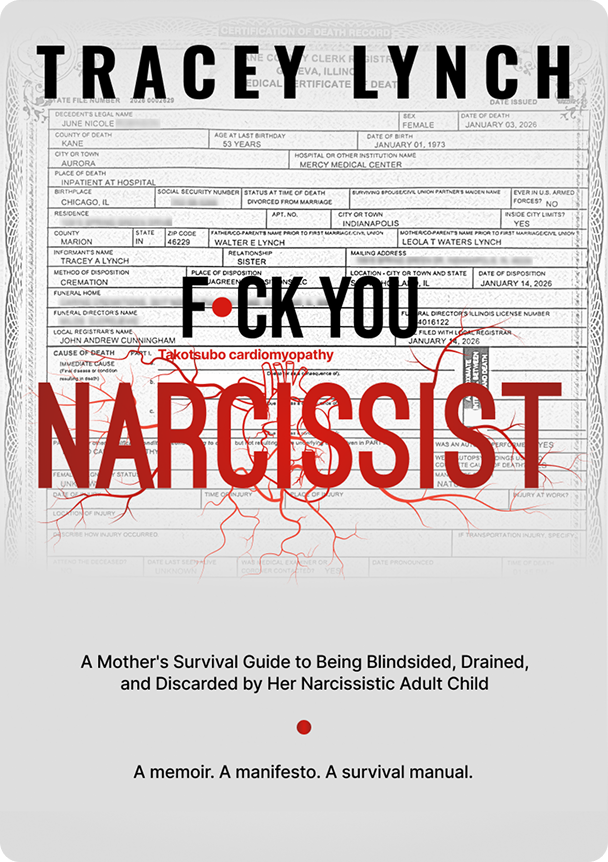
They say her heart gave out.
I say it gave in.
Those two phrases carry different universes inside them. Giving out implies collapse, failure, a body that could not continue. But giving in suggests something else entirely—release, consent, a yielding to a call that could no longer be ignored. When I hold the truth of my sister’s passing—just two days after her 53rd birthday—I do not feel defeat. I feel a crossing. I feel the hush of a sacred threshold.
She did not leave because life was empty. She left because, in some mysterious way, her heart had already touched the fullness of another world.
Nature has always taught me that surrender is not the opposite of life—it is its deepest rhythm. Leaves do not cling to the branch when winter comes. Rivers do not argue with gravity. Seeds do not resist the dark. They fall, they yield, they soften. They trust that what looks like an ending is often only a change in form.
My sister’s heart did not stop. It completed a cycle.
For most of my life, I have written about sustainability as something far more than environmental stewardship. I have written about it as a way of being—an ethic of endurance, a spiritual commitment to keep what is good alive even when the world grows cold. I have written about gardens, forests, ecosystems, and the way human lives mirror the same laws of growth and decay. But nothing has tested my theology of sustainability like losing her.
She was six years younger than me. I was not meant to witness her leaving first. I was not prepared to watch the dream she carried—of marriage, of deep connection with her three adult children, of grandchildren bouncing on her knees—appear to be undone. It feels unnatural, like a tree felled before it bore its sweetest fruit.
And yet… nature does this too.
There are trees that release their seeds only after fire. There are flowers that bloom only once their parent plant has withered. There are ecosystems that depend on death as much as life. What appears violent to the eye is, in fact, part of a choreography older than grief itself.
We resist this truth because we love. And love makes us want permanence. Love makes us believe that the story should always continue the way we imagined it. But nature does not follow our blueprints. She follows her own wisdom—a wisdom that does not rush, does not explain, and does not apologize.
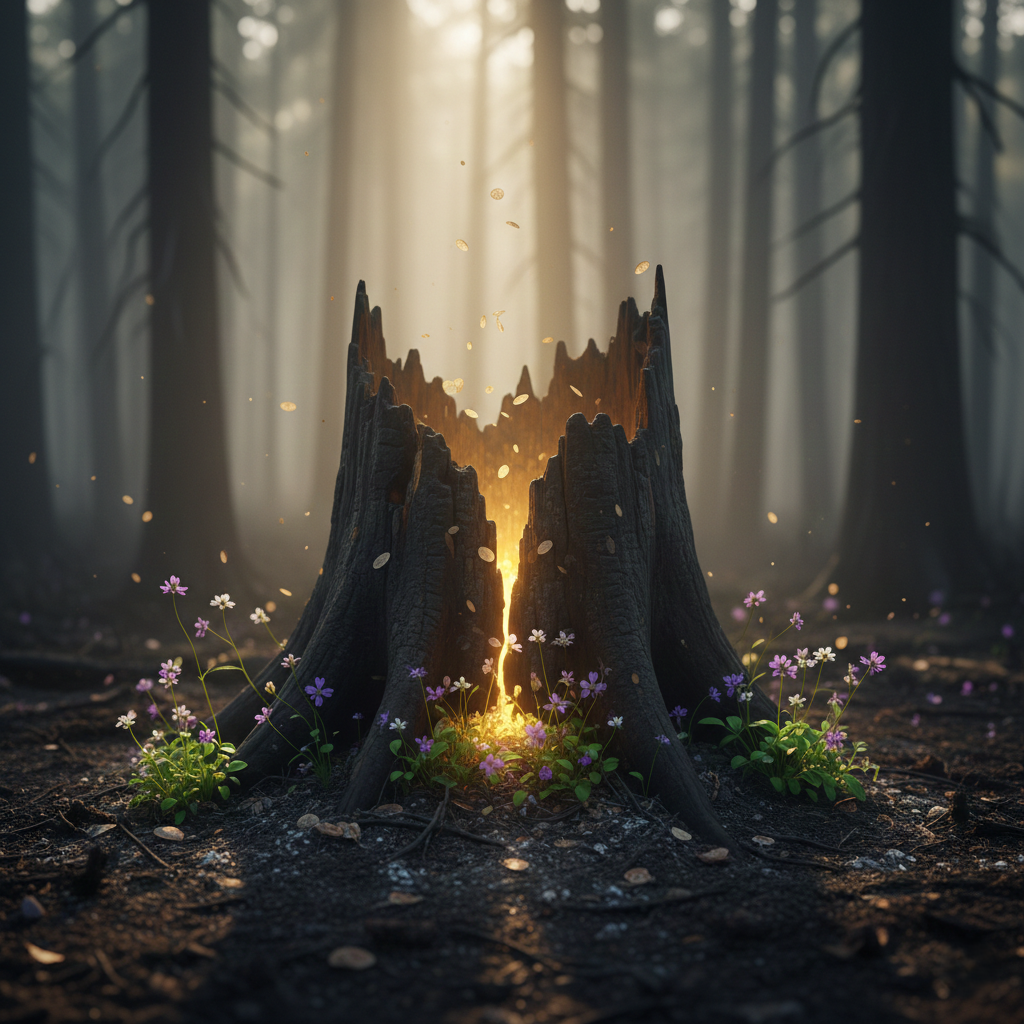
In forests after a wildfire, the ground looks devastated. Blackened. Still. But beneath the ash, something is happening. The heat cracks open seed coats. Nutrients return to the soil. Life begins again in secret. No one watching the flames would call it sacred—but the forest does not argue with the fire. It receives it. It surrenders to transformation.
I am learning that surrender is not the absence of courage. It is the presence of trust.
My sister was courageous. Not because she survived everything, but because she loved deeply even when life did not honor her dreams the way she hoped. She believed in joy. She believed in relationship. She believed that tenderness was still worth offering, even when the world can be sharp. That is not weakness. That is spiritual strength.
So when they say her heart gave out, I cannot accept the implication of failure. Her heart did not fail her. It fulfilled something we cannot yet understand.
Perhaps it answered a call we cannot hear.
Perhaps it crossed into a field of peace that no longer required endurance.
Perhaps her dream, as I now believe, existed in another universe—one not bound by time or disappointment, one where she is still mothering, loving, laughing, and being held in a way this world could not sustain.
There is an ecology to grief that we do not talk about enough. We expect ourselves to “move on,” to compartmentalize, to find closure. But ecosystems do not close. They evolve. They shift. They carry the memory of what has been while making space for what must now become.
Grief is not a detour from life. It is a season of it.
In winter, everything looks dead. The fields are bare. The trees stand skeletal. The sky feels heavier. But life has not disappeared—it has gone inward. It has retreated to the roots. It is conserving energy, gathering strength, preparing for a future that does not yet show itself.
This is what I am learning to do now: to go inward without giving up. To conserve hope without pretending. To honor sorrow without letting it turn my heart to stone.
Sacred surrender does not mean we stop loving. It means we release control over how love must express itself.
My sister’s love has not ended. It has simply changed climate. It now lives in memory, in legacy, in the quiet ways her children will carry her voice forward. It lives in the ache I feel when I say her name. It lives in the compassion I now hold for every soul navigating an ending they never chose.
Sustainability, in its truest form, is not about preservation at all costs. It is about honoring cycles. It is about recognizing that life renews itself not by resisting change, but by moving through it.
We cannot carry everything into the next season. Some things must fall away. Some must decompose. Some must return to the soil so that something new—something perhaps wiser, gentler, more rooted—can rise.
This is the ecology of sacred surrender.
To give in is not to disappear. It is to become something else.
And so, I choose to believe that my sister has not left the story—she has simply crossed into its deeper chapter.
Her heart did not give out.
It gave in to eternity.