
Blog
The Circular Economy of Grace

“Grace is the face that love wears when it meets imperfection.” — Joseph R. Cooke
There are days when the weight of disappointment settles deep in the chest. When you’ve given your best, trusted freely, and still find yourself standing amid pieces that don’t fit together anymore. The human instinct is to discard what hurts — to label it waste. But grace teaches us another way: nothing offered in love is ever wasted.
In the language of sustainability, the “circular economy” describes systems that reuse and repurpose rather than discard. Every output becomes an input for something new. Nothing is truly lost — only transformed. The same principle applies to the heart. Grace is our inner recycling system. It takes what should have destroyed us and turns it into wisdom, empathy, and a quieter kind of strength.
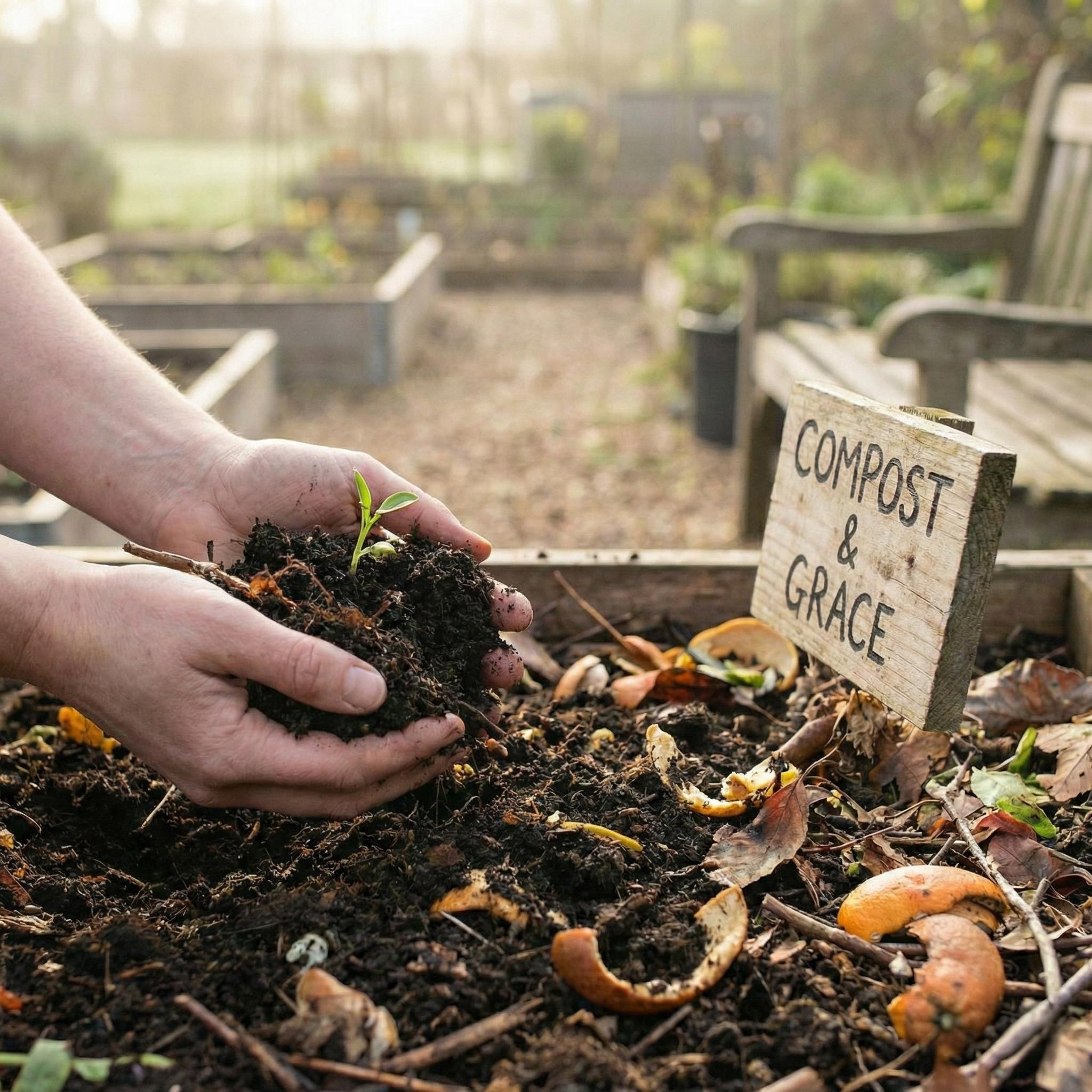
I’ve learned that grace doesn’t erase the pain — it reassigns its purpose. It’s the process by which heartbreak becomes insight, betrayal becomes boundary, and loss becomes clarity. There is something profoundly sustainable about a heart that refuses to waste suffering. Like compost that turns decay into nourishment, grace transforms what’s broken into what feeds us next.
Forgiveness is a part of that cycle, though it rarely arrives on schedule. Forgiveness is not a light switch; it’s a slow thaw. It asks us to unclench our fists, not because the wrong was small, but because carrying it drains the energy we need to heal. Grace allows us to recycle anger into understanding, disappointment into release. It’s not passive — it’s redemptive.
Leadership, too, depends on this circular economy. In a world where mistakes, misunderstandings, and mismatched expectations are inevitable, grace keeps systems humane. It keeps teams connected. It sustains trust where policy alone cannot. In my life and in my work, grace has always been a silent pillar of sustainability — the thing that lets people be human and still grow. Without grace, the structure would crack under the weight of its own perfectionism.
The beauty of grace is that it doesn’t wait for others to deserve it. It starts with us. We extend it inward first, to the parts of ourselves that wish we’d seen things sooner, chosen differently, or loved more wisely. There’s healing in saying, “I didn’t know then what I know now.” That simple admission opens a window for light to come in.
Sometimes God uses pain as a recycling bin — collecting all the remnants of our experience and sending them through His refining process until they come back as purpose. That’s divine sustainability. It’s the assurance that nothing is truly lost, even when it feels like it.
And yet, grace doesn’t mean staying where we’ve been hurt. It means blessing what was and releasing it to its next use. It means choosing not to pollute our spirit with resentment. Because bitterness is waste — heavy, stagnant, and unsustainable. Grace, on the other hand, is renewable. The more you give it, the more it grows.
In my own quiet moments, I’ve begun to see grace not as a feeling, but as an ecosystem — one that keeps the air of the soul breathable. It allows compassion to circulate, humility to root, and hope to blossom again after the frost.
We can’t control what others recycle or discard, but we can tend to our own inner garden. When we practice grace — toward others, toward ourselves — we participate in the divine cycle that keeps life moving forward.
So when something ends, don’t rush to throw it away. Hold it, bless it, learn from it. Then let grace remake it into something new. That’s the circular economy of the heart — and its yield is peace.