Blog
The Ecology of Endurance

“In the depth of winter, I finally learned that within me there lay an invincible summer.” — Albert Camus
There are seasons of life when it feels as though the soil of our soul has gone dry. When people we trusted walk away. When the air around us grows heavy with misunderstanding, and the work of our hands — the good, noble, hard work — is overshadowed by clouds we didn’t call for. And yet, if nature teaches anything, it’s that the barren seasons still belong to life.
Sustainability has always been a word I’ve loved — not just as an environmental principle, but as a spiritual one. To sustain is to keep alive what is good. It’s to nurture the essence of something through drought and frost, until it blooms again. In that sense, every heartbreak, every pruning, every fire that sweeps through our inner landscape is not destruction — it’s renewal in disguise.
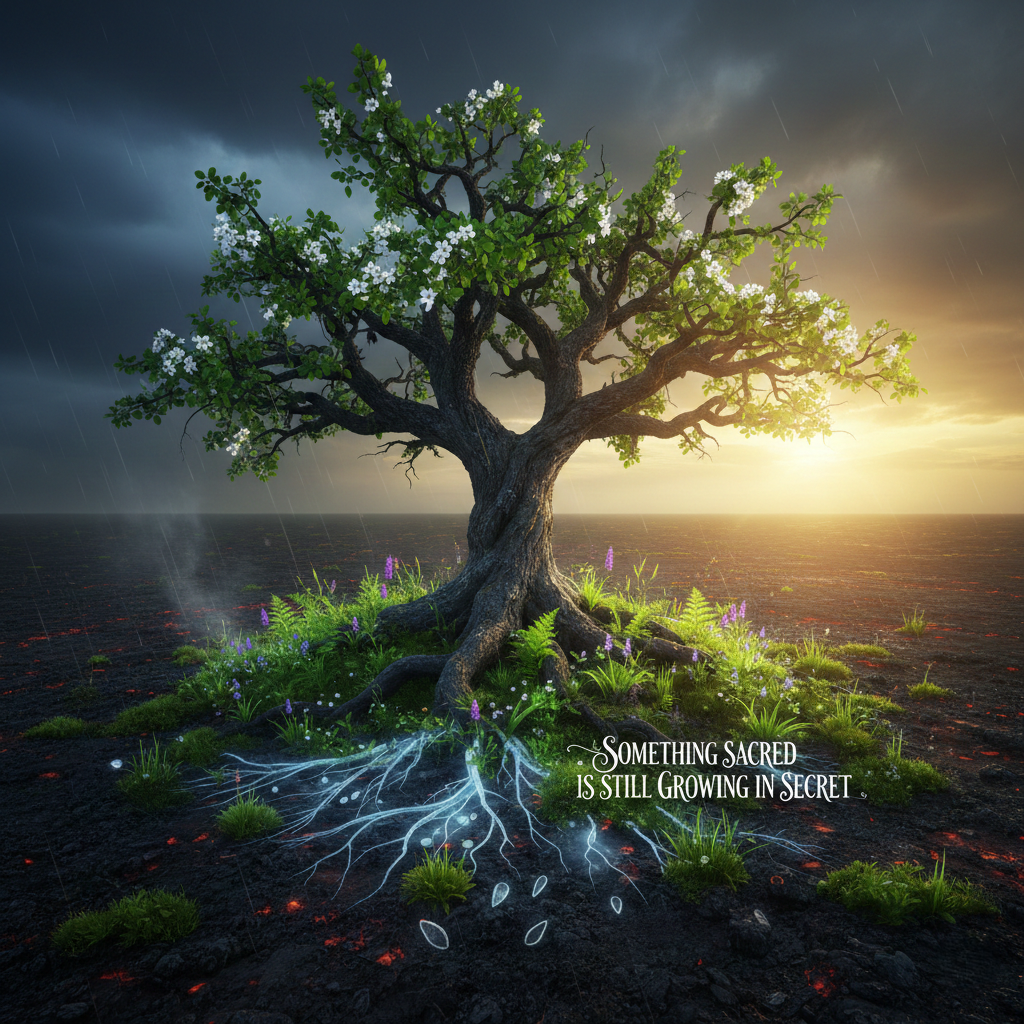
In a forest after a wildfire, the ground looks charred and lifeless. But underneath that dark surface, roots are whispering. Seeds are waiting for light. Some trees only release their seeds after they’ve been burned. Nature doesn’t resist her seasons; she trusts them. And I believe we are called to do the same — to believe that even when everything we’ve built feels threatened, something sacred is still growing in secret.
Leadership often carries this paradox. We are asked to be both oak and soil — to stand tall in vision, and to stay soft enough to let what’s dying give way to what’s next. There’s humility in that. It means we don’t control every storm, but we can choose how deeply we root ourselves in truth, faith, and purpose.
In these past months, I’ve thought often about what it means to endure gracefully. Endurance isn’t about pretending everything’s fine. It’s about holding your peace while the winds test your foundation. It’s about choosing gratitude in small, quiet ways: a sunrise, a loyal friend, a new opportunity that seems to bloom right in the middle of chaos. Gratitude is the spiritual mulch that keeps hope alive.
And then there’s the hardest part — letting go. Letting go of what can’t stay. Of people who can’t see your light anymore. Of the comfort that kept you from expanding. Sustainability in nature always involves letting go of something — a leaf, a branch, a season — so energy can return to the roots. We can’t carry everything into our next chapter; some things must decompose to become nourishment for what’s coming.
I’ve learned that faith is the ultimate renewable resource. When our faith runs low, life finds ways to refill it — sometimes through loss, sometimes through grace, sometimes through a reminder that we are still standing. The storms reveal not how fragile we are, but how anchored.
So if you find yourself in a winter of the spirit — misunderstood, weary, or afraid — remember this: endurance is not about waiting for the storm to end. It’s about learning to breathe in the rain. You are still growing. You are still rooted. The ground beneath you, no matter how dark it looks, is fertile with promise.
Sustainability begins in the soil of the soul. And life, faithful as ever, will find a way to bloom again.