Blog
Built for This: What Evolution Never Intended You to Lose.

The Call That Changes Everything
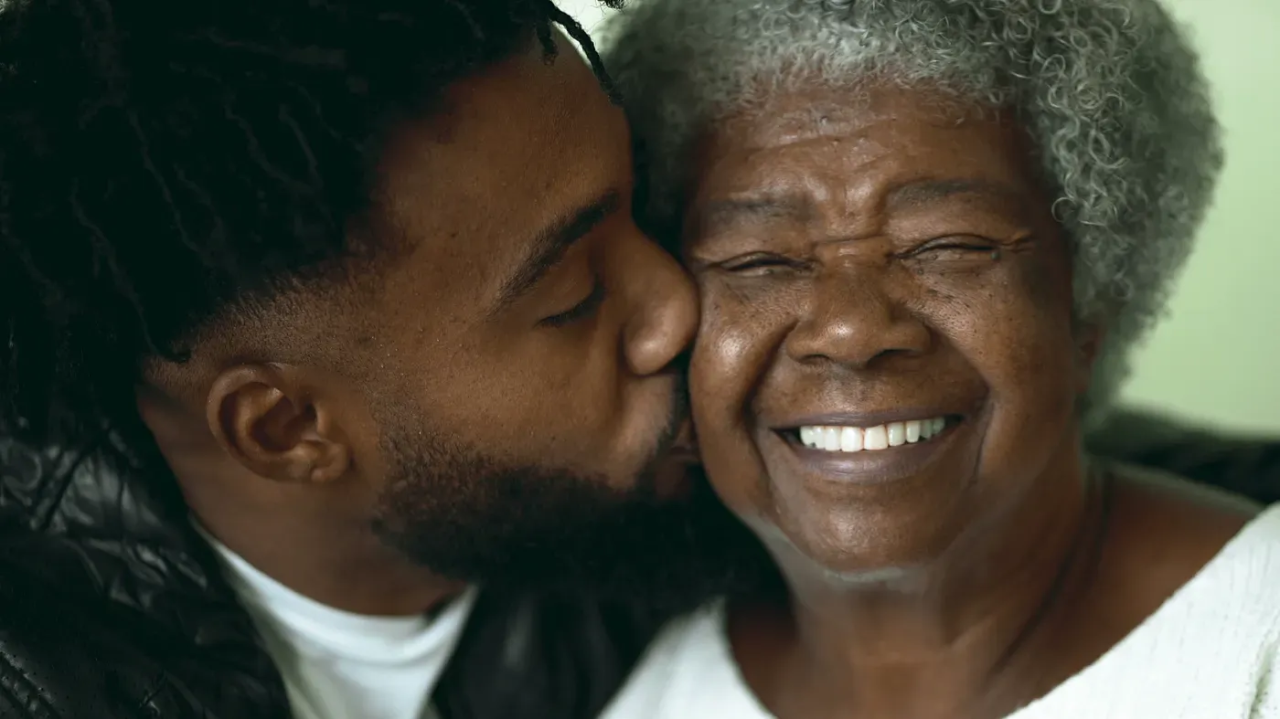
His voice was shaking when he called. That particular tremor, the one that breaks a grandmother’s heart the way nothing else on earth can break it, came through the phone before the words did.
“Nana?”
It was my grandson William. Thirteen years old. The one I had brushed hair for every morning before school, the one I had watched every version of Toy Story with until I could recite the dialogue in my sleep, the one who had jumped around my living room to Imagine Dragons songs until we were both out of breath, his laugh ricocheting off every wall in the house like something alive and necessary and mine. He was wearing the green dinosaur pajamas with the spikes down the back and the feet built in the last time I held him. I know this because I can still feel the synthetic fleece under my hands.
He told me his mother had packed his clothes. That she was threatening to turn him over to DCS. That she’d left him sitting in the lobby of her own office building, her child, waiting on a hard chair like a visitor to be claimed or discarded, and that he didn’t know who to trust.
He said he missed me. He was terrified.
That call lasted two hours. I told him I loved him. I told him it wasn’t his fault. I told him I would always be his Nana, even if I couldn’t see him. And when I hung up, I cried until I couldn’t breathe. Not the soft kind of crying that releases something, but the other kind. The kind that tells the body: what you were built to do, you cannot do. What you were made for, has been taken. And your cells know it. Your cells have always known it.
The Evolutionary Architecture of Grandmothers
There is a grief in certain women’s bodies that has no adequate modern name. It moves through them quietly, mistaken for depression, for anxiety, for the diffuse melancholy of midlife. Doctors prescribe things for it. Therapists create language around it. And still it persists, low, oceanic, older than any word we have for it, because what it is mourning is not a recent loss. It is mourning a role that evolution built a woman to inhabit. A role that, for 1.8 million years, was the reason human women lived as long as we do.
Evolutionary anthropologist Kristen Hawkes of the University of Utah spent years watching the Hadza people of northern Tanzania, one of the last remaining hunter-gatherer societies on earth, and noticed something that upended everything we thought we knew about human longevity. Post-menopausal women were not evolutionary leftovers. They were infrastructure. When a mother weaned one child to have another, it was the grandmother who stepped in: foraging, feeding, reducing the child’s risk of death, freeing the mother to reproduce again sooner. Grandmothers, Hawkes’ data showed, were directly responsible for the survival of grandchildren. The longer the grandmother lived, the better the grandchildren fared.
The grandmother who dies of grief cannot feed anyone.
This was not sentiment. This was selection pressure. This is why women live past menopause. This is why we are built to survive into our seventies and eighties. We were needed in our seventies and eighties. The third act was not a postscript. It was load-bearing architecture.
And the neuroscience confirms what the bones already knew. A 2021 study from Emory University used fMRI imaging to scan grandmothers looking at photographs of their grandchildren. What the researchers found stopped them: grandmothers showed greater activation in regions associated with emotional empathy when viewing their grandchildren than when viewing their own adult children. The grandmother-grandchild bond engages something even more ancient and less cognitively mediated than the mother-child bond. Rawer. Older. Closer to the original wiring.
These are not feelings. These are physiological events. The body performing a function it was built to perform. And when that function is severed by estrangement, by a narcissist’s calculation, by a daughter who uses her own children as leverage, the body experiences it as deprivation. Not grandmother grief in the modern psychological sense alone, but something older and more physical. A hunger with no food. A function with nothing to perform. The grandmother circuitry firing into absence, over and over, with nothing to receive it.
The Severing and the Ancestral Toll
My grandmother ran one of Mississippi’s first safe houses for battered women. I cared for her until she died. I was barely grown.
I did not know then what I was being given. I thought I was being asked. I thought caregiving was a duty, a weight, a calling that came at a cost. I did not understand that my grandmother was planting something in me: the same thing she planted in every woman she sheltered, every child she held, every family she refused to let the world destroy. She was transmitting. That is what grandmothers do. That is what they have always done, across every culture that understands what they are.
In Yoruba communities, in Zulu households, in the village structures of the Akan and the Igbo and the Luo, the elder woman was the living archive. The one who carried the language in her mouth, the healing knowledge in her hands, the genealogy in her memory, the spiritual framework in her bones. Children were not merely loved by their grandmothers. They were formed by them. Identity was transmitted through them the way water moves through roots, invisibly, essentially, without which nothing grows.
The philosophy beneath all of this had a name: Ubuntu. I am because we are. Not a bumper sticker. A cosmology. A complete architecture of human belonging that places the individual inside the community, the way a cell exists inside a body. The grandmother in this framework was not merely a family member. She was a node in a living network that stretched backward to ancestors and forward to children not yet born. She stood at the intersection of was and will be, holding it open so the community could move through it intact.
And then the ships came. And the severing began. And what the transatlantic slave trade did to African grandmothers was so structurally total that we have spent two centuries searching for language adequate to describe it. Because what was destroyed was not merely family connection in the emotional sense. What was destroyed was the entire intergenerational transmission system, the living architecture through which a people knew who they were.
The deliberate separation of grandmothers from grandchildren was not an unfortunate byproduct. It was the institution. A woman who knows her lineage, who carries her grandmother’s remedies and her grandmother’s grandmother’s songs, that woman has an interior country that cannot be colonized. So the grandmother had to be torn from that intersection. Placed in a field. Her knowledge declared worthless. Her authority declared nonexistent. Her body declared property.
The grandmother grief that lives in Black American women’s bodies is not the same grief that lives in any other body. It is evolutionary loss layered beneath historical violence layered beneath the relentless, generation-by-generation disruption of every attempt to rebuild. And rebuild they did. With ferocious, almost incomprehensible resilience. The Ubuntu architecture, I am because we are, persisted not because it was permitted to persist but because it was encoded too deeply to be fully extinguished. The body kept what the law tried to erase.
And my body keeps it still. Even now. Especially now.
A Door Left Unopened
I bought them green dinosaur pajamas, the kind with the spikes down the back and the feet built in. I brushed their hair every morning before school. I cleaned up vomit and dried tears and drove William to his therapy appointments when it became clear they needed someone to talk to about things no child should have to process. I jumped around the living room with them to Imagine Dragons songs until we were all out of breath, three generations of lungs going at once, and the house felt like it was made of laughter instead of walls.
And then one day, not gradually, not with warning, not with the mercy of a reason that made sense, I was gone from their lives. No goodbye. No, thank you. Just erased. By a daughter who had learned to use her children as currency. By a narcissist who understood, better than anyone, that the surest way to bring a grandmother to her knees was to put her grandchildren behind a door she could not open.
I can see, from a distance, through the cold glass of social media, from the sideline of a life I am not allowed to enter, who they are becoming. The older one is sixteen now. He was three when I last held him in those dinosaur pajamas. The younger one is twelve. They are growing up without my stories. Without my recipes. Without the particular love that is not parent-love and not friend-love but something older and more irreplaceable than either: the love of the grandmother, the love that evolution designed to keep them alive.
Do you know what it is to see your grandchildren from afar? To catch a glimpse of them in the background of someone else’s photograph and have to set your phone down because you cannot breathe? To drive past their school and wonder if they are inside, whether they are okay, whether anyone has told them the truth of who you are to them?
I bought presents. Every Christmas. Even during the estrangement. Small things. Things that said: I still know you. I still love you. I haven’t forgotten who you are. But the presents sat unopened in my closet, joining the pile from the year before and the year before that. One Christmas I placed them in a box, not out of anger but out of mercy for my own heart, and I said to myself: if they come looking for me, I will be here. But I will not stay frozen in the doorway.
Choosing Survival Over Waiting
That was the day I understood what it means to choose survival over perpetual waiting. Not because I stopped loving them. Because I understood, finally, what the Hadza grandmothers already knew: the grandmother who dies of grief cannot feed anyone. The grandmother who stays alive, who keeps the knowledge, who holds the story, who remains at the intersection of was and will be, is the one who gives the grandchildren something to find when they are ready to come looking.
My mother died in 1997. She was fifty years old. I was thirty. Four strokes had taken her voice, her vision, her right side and her ability to feed herself or move through the world unassisted. In one of our last real conversations, when I watched her struggling through her rehabilitation, she looked at me and said, “Don’t do that to yourself, Tracey. The body wears out. I was so surprised, but my body wore out.”
And on her deathbed, in the last weeks of her life, she gave June and me one final instruction. She said, “Take good care of Morey. Love your sons, yes. But love your daughters with that emotional bond that only occurs between women. Touch your daughters. Believe your daughters. Believe in your daughters.”
I kept that promise. I loved my daughter with everything I had. I believed in her. I believed her. And she used every bit of it to dismantle me. And she used the grandsons, those boys in the dinosaur pajamas, those boys who jumped to Imagine Dragons, those boys whose hair I brushed every morning, as the instrument.
This is what my mother could not have foreseen when she issued her deathbed instruction. This is the possibility she could not have named: that the daughter you pour everything into might one day pour your grandchildren out like water, and call it growth, and call it healing, and call it boundaries, and call it whatever word the algorithm has handed her this season to make destruction sound like self-care.
But my mother also taught me something she may not have intended to teach: that a woman’s body keeps score. That you cannot run yourself into the ground forever. That the body wears out. And I have decided, in her memory, and in June’s memory, and in the memory of every grandmother who was ever torn from the grandchildren she was designed to help survive, that mine will not wear out for this. Not for this. Not for a door I cannot open. Not for a grandchild I cannot reach. Not for a grief that belongs to someone else’s choices and not to mine.
The Naming of the Grief
What do we owe women who carry this grief? What do we owe ourselves?
First and most urgently: the naming. The refusal to let this grief be called something smaller than it is. To stop pathologizing it and medicating it and asking it to fit inside diagnostic categories and resources built by people who never considered that a grandmother’s particular heartbreak might have roots going back 1.8 million years. To say clearly to every woman standing in the wreckage of an estrangement she did not choose: what you are experiencing has a history that stretches further than you can see.
Your body is mourning something real. Your grief has evolutionary roots. You are ancient, and that ancient thing inside you is in pain. You are not weak. You are not broken. You are the grandmother the Hadza women were. You are the Ubuntu architecture that survived the ships. You are the intersection of was and will be, holding it open still.
And second: to understand that the grandchildren are not lost to you yet. One day, they will be old enough to search. One day, they will ask why Grandma stopped coming, and someone will have to answer, and the answer will either be the narcissist’s version or the truth.
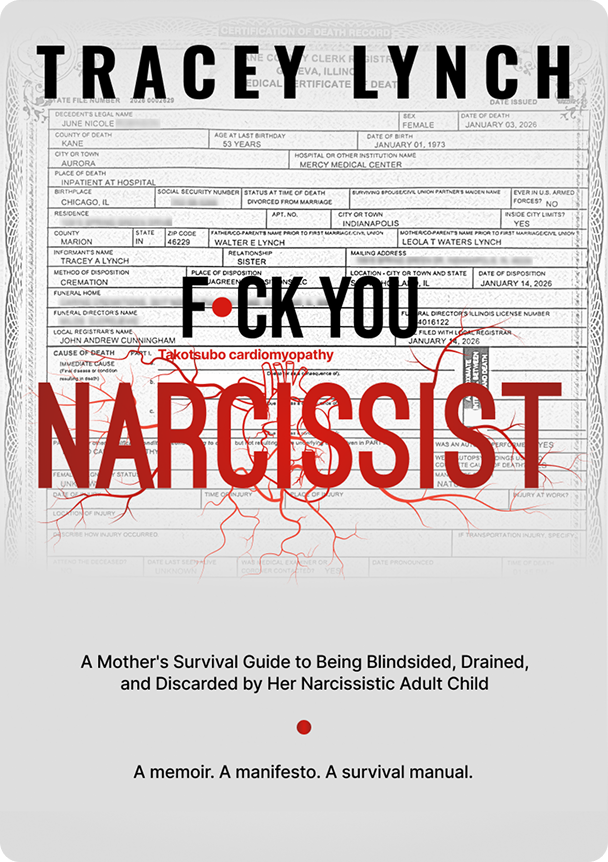
I am writing the truth. I am writing it in every essay and every page of the book that is coming, because the only way to be at that intersection when they arrive is to still be standing there. Still alive. Still holding the story. Still the woman with the stories and the recipes and the particular love that evolution designed specifically for them.
I told William I would always be his Nana, even if we couldn’t see each other. And when I hung up, I cried until I couldn’t breathe. And then I got up. Because that is what grandmothers do. It is the oldest thing we know how to do. It is the thing we were built for.
The grandmother the body never forgot is still here. She is waiting at the intersection. She is holding the door open in the only way she can: by staying alive.
Explore More from Tracey Lynch: